If you lead a contact center, you already know the number that keeps you up at night. Contact center agent turnover is averaging 40% per year industry-wide, and on a 35-agent team, that means roughly $140,000 bleeding out annually — and that’s the conservative math. However, once you factor in lost productivity, quality dips, and the morale hit of perpetual onboarding, the true cost easily doubles.
Most leaders reach for the obvious levers first: higher pay, better bonuses, new career paths. Those things matter. Nevertheless, they won’t move the needle on turnover if you’re ignoring the quieter — and far more fixable — culprit sitting on every agent’s desktop.
In short, your tools are driving your best people out the door.
The Real Root Cause of Contact Center Agent Turnover: Outdated Tools
When we talk to departing agents, the reasons align disturbingly well. Low pay, sure. Limited growth, sometimes. However, the overwhelming frustration? They’re drowning in tools.
Consider what an average call demands. An agent needs to answer the phone, pull customer history, check account status, log notes, and route to the right department — all while keeping the customer on the line. Instead of one unified system, they’re juggling three, four, or even five separate platforms. As a result, they’re tab-switching constantly. Meanwhile, they’re hunting for information and asking supervisors for help on basics. Furthermore, every additional second spent searching is another second the customer is waiting.
After eight hours of that friction, five days a week, the cognitive load becomes exhausting.
- New agents — already stressed about learning — feel it hardest. For instance, they’re slower to find answers, they miss quality benchmarks, and their confidence tanks. Three months in, they’re job-hunting.
- Your best agents adapt. Over time, they memorize shortcuts, build workarounds, and hustle through the friction. However, even your stars eventually burn out. In fact, the mental overhead of compensating for bad tools is a slow grind — and one day, they simply stop showing up for it.
In other words, this isn’t a people problem. It’s a platform problem.
The Hidden Math Behind Contact Center Agent Turnover
Let’s put real numbers on the damage:
- $7,500 — average cost to replace a single agent (recruiting + training + lost productivity combined)
- $140,000+ — annual turnover cost on a 35-agent team running at industry-standard 40% attrition
- 2x — the true cost when you factor in customer experience dips, quality degradation, and team burnout
- 3 months — how long before a frustrated new agent starts job hunting
Now, compare that to the cost of modern, unified contact center software. A single prevented departure pays for your software subscription for months. As a result, the ROI isn’t a slow burn — it’s immediate, and it compounds over time.
Moreover, the benefits stack. Lower turnover means higher institutional knowledge. In turn, quality improves because experienced agents aren’t constantly training new ones. Morale lifts because the team isn’t perpetually in onboarding mode. Ultimately, customers sense the stability, reach familiar voices, and resolution rates climb. First-contact resolution improves, and CSAT follows.
How the Right Contact Center Software Reduces Agent Turnover
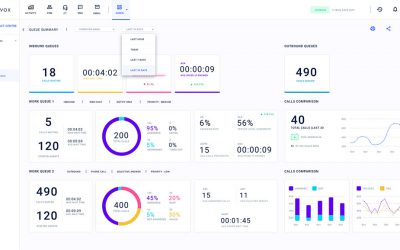
Indosoft addresses this at the root. Instead of forcing agents to context-switch between disconnected systems, a unified platform keeps everything an agent needs in one place: customer context, knowledge base, call scripts, disposition options, and case routing — all visible without ever leaving the call interface.
Specifically, that single change transforms the agent experience in four ways.
1. Clear Routing Reduces Agent Turnover Risk
With clear, rules-based routing, agents know exactly where to send a call — no guessing, no interrupting supervisors, no dead-air pauses. Consequently, uncertainty drops and confidence rises. Transfers land where they should on the first try.
2. Real-Time Guidance for Call Center Agent Retention
Built-in call guidance means agents get help the moment they need it, without having to unmute and ask. Therefore, calls move faster and first-contact resolution improves. Just as importantly, agents feel supported instead of abandoned — especially new hires who most need a safety net.
3. Less Manual Admin, Less Burnout
Automated post-call notes and disposition capture eliminate the minutes spent after every call retyping information into a separate system. In addition, agents finish their shifts on time — no more 15-minute note-clearing backlog that makes 5 PM feel like 6 PM every single day.
4. One Source of Truth Across Your Contact Center
With a unified platform, there’s no conflicting data between systems. No “the CRM says this, but the billing system says that.” Therefore, agents answer with confidence because the information in front of them is correct, complete, and current.
When an agent’s day involves less friction, fewer failed transfers, fewer escalations they can’t handle, and more successful calls they can actually close — the job feels manageable. Sustainable. Worth staying for.
What Unified Contact Center Software Looks Like in Practice
One of the clearest examples comes from a 28-agent contact center that was hemorrhaging people. Year-over-year turnover had climbed to 48%. Every quarter brought three to four departures, and recruiting had essentially become a full-time job.
When leadership dug into exit interviews, the pattern was stark. Surprisingly, people weren’t complaining about compensation — they were complaining about fragmentation. Specifically, agents were switching between four separate platforms per call: customer history in one tool, scripts in another, routing in a third, and post-call notes in a fourth. On top of that, onboarding was brutal, and experienced agents were quietly burning out from the workarounds.
After deploying Indosoft’s unified platform, the results within the first year were striking:
- Turnover dropped 31% — from 48% down to 33%
- Average handle time decreased 12% — agents spent less time searching, more time resolving
- New agent ramp time cut by 40% — training got easier because the tool complexity disappeared
- Team morale scores up 23% — agents reported feeling “supported” and “less frustrated”
Same team. Identical customers. Familiar faces at every desk. Different tools.
How to Diagnose Your Contact Center Agent Turnover Problem
If your team is struggling with turnover, ask yourself an honest question: Are agents leaving because the job is genuinely bad — or because the tools are?
In many cases, if your agents are strong but frustrated with your systems, the problem is solvable. Better yet, it doesn’t require ripping out your entire contact center infrastructure or signing a 36-month enterprise contract.
Indosoft was built for exactly this scenario:
- Mid-market contact centers with good people and legacy-tool frustration
- No 50-seat minimums and no 36-month lock-ins
- One unified screen with everything an agent needs
- Fast deployment — measured in weeks, not quarters
- No dedicated IT team required to run it
Ultimately, your turnover rate is controllable. Start by giving your team tools that don’t fight them every step of the way.
Ready to Cut Your Contact Center Agent Turnover?
If you’re tired of watching good agents walk out the door — and watching $7,500 walk out with each of them — let’s talk. Specifically, we’ll show you exactly how unified contact center software cuts administrative friction, speeds up calls, and gives your agents a reason to stay.
See what lower turnover and faster, happier agents actually look like on the floor.