Real-time agent assist is the single biggest contact center upgrade of 2026. By giving every rep an AI co-pilot that listens, summarizes, and surfaces answers during the live call, real-time agent assist helps operations teams do more without hiring more agents. Moreover, contact centers rolling it out routinely report 20 to 30 percent drops in average handle time and 10 to 15 percent jumps in CSAT within the first quarter.
In this guide, we explain what the technology actually does, why it matters now, and how to deploy it without disrupting the workflows your team already trusts.
What real-time agent assist actually does
The system is an AI layer that runs alongside the conversation and helps the agent in three ways. First, it transcribes the call live so the agent never has to take notes. Next, it interprets what the customer just said and surfaces the right knowledge article, script step, or compliance disclosure. Finally, it tracks sentiment and tone, alerting supervisors before a difficult call escalates.
Unlike traditional knowledge bases, the assistant works without the agent searching for anything. The AI listens, classifies intent, and pushes the right content to the desktop in under two seconds.
Why this AI layer matters now in 2026
Contact center buyers face a brutal squeeze. Call volumes keep climbing, but hiring is harder than ever and training cycles are getting longer. As a result, AHT and abandonment both creep up while CSAT slides.
Furthermore, generative AI in contact centers has matured to the point where the technology is reliable enough for production. The latency is acceptable, the hallucination rate is low, and the integrations are stable. Therefore, agent assist is no longer an experiment.
In addition, customers themselves expect faster, more personalized service. They have also stopped tolerating long holds and repeat questions. Consequently, the AI co-pilot is becoming a competitive baseline rather than a differentiator.
Core capabilities to look for in real-time agent assist
Not every “AI agent assist” badge means the same thing. Here are the four capabilities that actually move metrics.
Live transcription
The system must transcribe both sides of the call with high accuracy in noisy environments. Specifically, look for word error rates under 8 percent, multilingual support, and the ability to redact PII on the fly for PCI and HIPAA compliance through Asterisk + AI.
Knowledge surfacing
Next, the assistant should pull from the actual knowledge base, not a generic foundation model alone. As a result, agents see your real policies, scripts, and product details rather than plausible-sounding hallucinations.
Compliance prompts
For regulated industries, the AI must catch missed disclosures. For example, if the agent forgets to read the Mini-Miranda on a collections call, the assist layer should prompt them on screen before the call ends.
Sentiment cues
Finally, sentiment tracking turns supervisors into proactive coaches. When the AI detects rising frustration, the supervisor can whisper or barge in before the customer churns.
Common rollout pitfalls to avoid
Even strong agent assist projects fail when teams skip change management. Watch out for these traps.
First, do not deploy without agent input. If agents feel surveilled rather than supported, adoption collapses. Therefore, pilot with a small group, gather honest feedback, and iterate before scaling.
Second, tune the suggestion rate carefully. Too many pop-ups overwhelm the agent. Conversely, too few make the tool feel useless. In short, aim for one timely suggestion every two to three minutes.
Third, audit the underlying knowledge base before go-live. Otherwise, the assistant will surface stale articles and erode trust on day one.
Measuring ROI from real-time agent assist
To prove ROI, track these KPIs before and after rollout:
- Average handle time — should fall within 30 days as agents stop searching manually.
- First contact resolution — see our deeper dive on why FCR matters more than ever for benchmarks.
- CSAT and NPS — should rise as conversations feel smoother to customers.
- New-hire ramp time — typically drops 30 to 50 percent because the assistant fills knowledge gaps in real time.
- Compliance violation rate — should approach zero on prompted disclosures.
Furthermore, segment these metrics by channel and queue. Voice, chat, and back-office work each respond differently to live AI coaching.
How Q-Suite delivers it on Asterisk
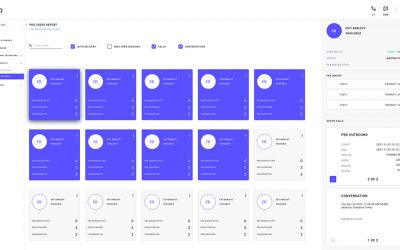
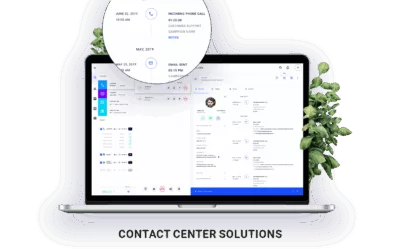
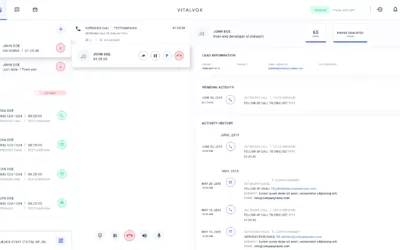
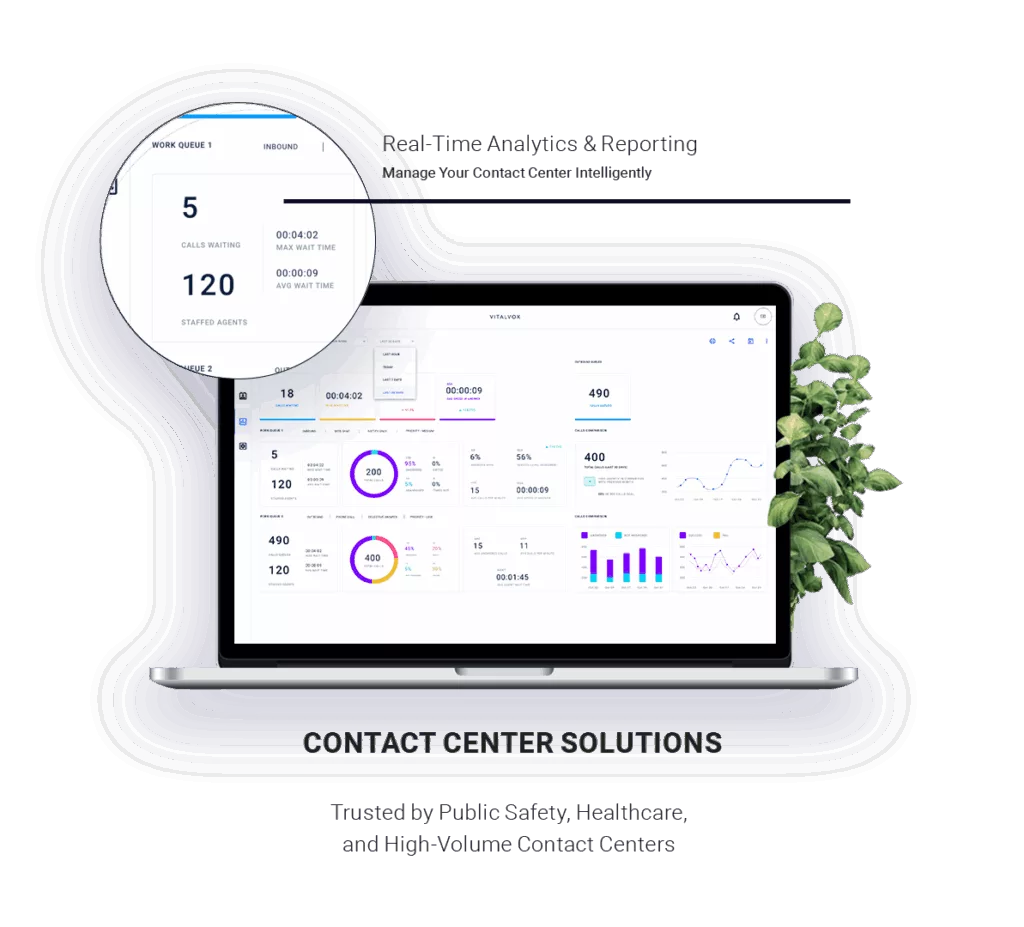
Indosoft’s Q-Suite contact center platform integrates real-time agent assist directly into the agent desktop. Specifically, Q-Suite streams live audio to the AI layer, returns transcribed and analyzed output, and renders prompts inside the same interface agents already use. In addition, Q-Suite preserves Asterisk’s open architecture, so you can swap in your preferred AI vendor without locking yourself into a single stack.
Because Q-Suite runs on open-source Asterisk, you also avoid the per-seat licensing costs that proprietary platforms charge for AI features. Therefore, you can roll the technology out across hundreds of agents without breaking the budget.
Ready to deploy in your contact center?
This kind of AI co-pilot is no longer optional for contact centers that compete on customer experience. In fact, it is now the baseline expectation for any operation that wants to keep AHT down and CSAT up in 2026.
Indosoft’s team can audit your current agent desktop and design a rollout tailored to your queues, knowledge base, and compliance needs. Contact Indosoft today to schedule a 30-minute discovery call and see how Q-Suite turns every agent into your best agent.